
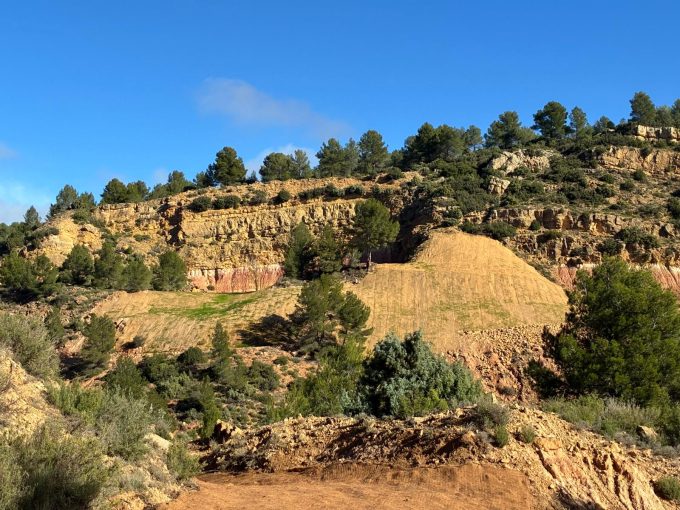
The Mining and Quarry Restoration Network highlights that support for the sector must necessarily go hand in hand with high-quality restoration or rehabilitation
Carmen Pi
The approval of the I Plan de Acción 2026-2030 para la Gestión Sostenible de las Materias Primas Minerales, announced by the Government last week, has once again placed mining at the centre of public debate. The document reinforces the strategic role of these resources in a context of growing demand linked to the energy transition and industrial development.
The plan sets out measures to improve the sector’s regulatory framework, promote innovation and strengthen security of raw material supply. A step that comes at a crucial time for Spain and Europe, where access to strategic minerals has become a priority.
In this context, at the Mining and Quarry Restoration Network, we believe that this new impetus for the sector is also an opportunity to strengthen the role of restoration in mining projects. Integrating plans from the outset to reduce environmental risks and ensure the recovery of land and its environmental and social functions is key.
“Mineral resources are where they are, and making use of them is part of our development as a society,” explains Beatriz Olmo, technical director of the Mining and Quarry Restoration Network (RMC). “The key lies in how mining and restoration works are planned, what resources are allocated to these activities and how their monitoring is carried out over time,” she points out.
Olmo also highlights the importance of the territory in these processes. “The involvement of the municipalities where mining operations are carried out is key to ensuring truly sustainable projects and to ensuring that, once mining activity has ended, the land once again contributes value to its surroundings rather than the opposite,” she says.
In this regard, mining restoration is playing an increasingly important role. “As we understand mining today, restoration must be incorporated from the project planning stage, once the resource has been identified. It is not something that comes at the end; it is part of the design itself,” she states.
At the Mining and Quarry Restoration Network, a non-profit technical association bringing together professionals and scientists working in mining and restoration, we work precisely to promote this approach.
Our main strength lies in connecting the four fundamental pillars of the sector: public administration, the scientific community, mining companies, and engineering and consultancy firms. We act as a platform for exchange that facilitates collaboration between these fields and promotes innovation and technical knowledge.
With professionals based throughout Spain, we address restoration challenges from a territorial perspective, providing solutions adapted to each project and the characteristics of each setting.
In line with this approach, RMC promotes spaces for technical discussion and exchange that contribute to advancing this shift in perspective. One of the next major milestones will be the I Congreso Internacional de Restauración Minera (CIREM 2026), which will take place in Valencia from 24 to 26 November 2026.
“CIREM 2026 comes at a particularly relevant time, with the Action Plan now approved. It is an opportunity to bring technical knowledge together and move towards a more integrated model of mining aligned with today’s challenges,” says Olmo.
The event will bring together professionals, companies, public administrations, and the scientific community to address some of the sector’s main challenges, from international restoration standards and geomorphological design to technological innovation, biodiversity, and nature-based solutions.
For Olmo, these types of initiatives are essential to continue moving towards more integrated mining. “Sustainability cannot remain just a word; it has to be genuinely applied from the design stage of projects,” she concludes.