
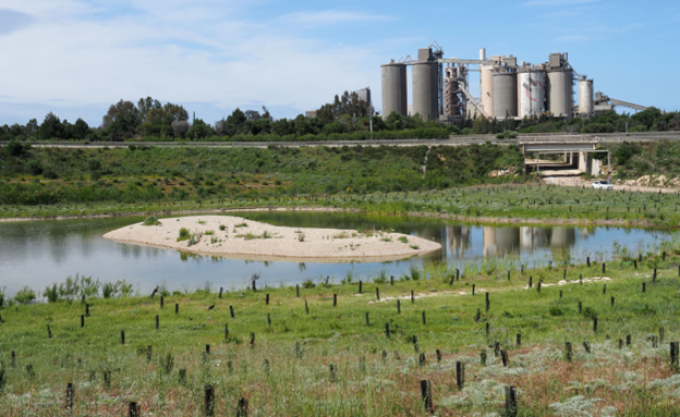
The company, a partner of the Mining and Quarry Restoration Network (RMC), has converted 100 hectares of former quarry land into a functioning wetland system with ongoing scientific monitoring
Carmen Pi
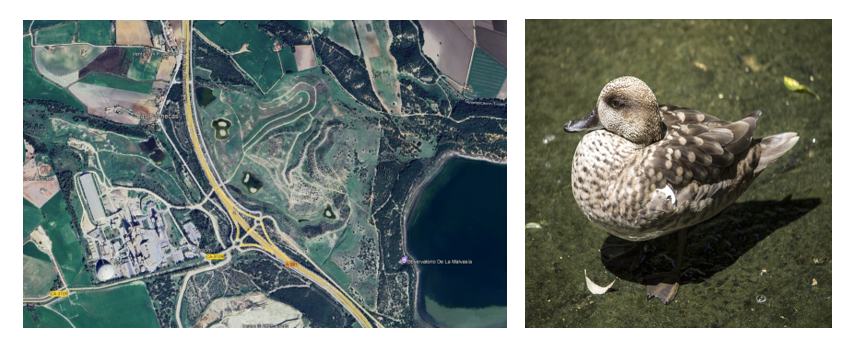
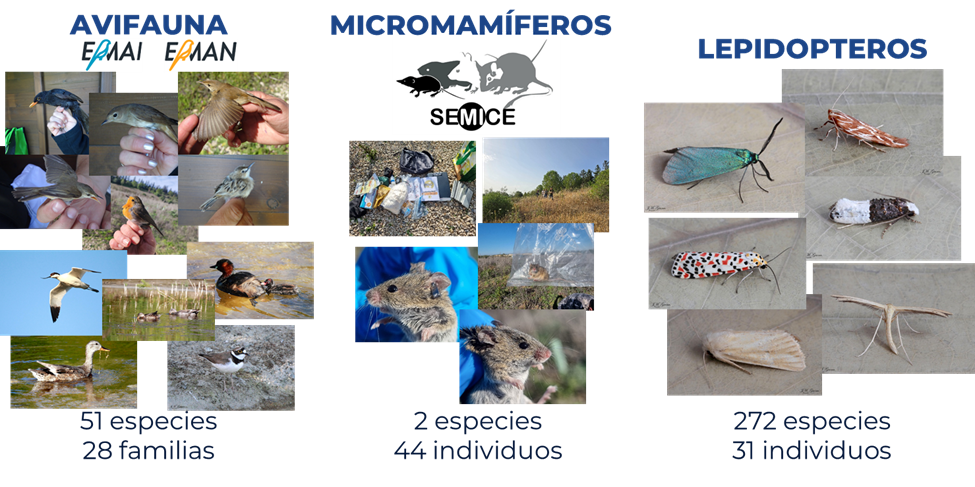
Holcim España has transformed the Alba Jerez I quarry in Jerez de la Frontera into a wetland complex that now hosts 51 bird species from 28 families, 272 species of lepidoptera and two species of small mammals as part of the National Programme for Monitoring Common Small Mammals in Spain (SEMICE). In this context, in July 2025, marbled teal, one of Europe’s most threatened birds and classified as “Critically Endangered”, bred naturally at the site. Seven of the nine chicks born last summer survived, an unusual occurrence in mining restoration.
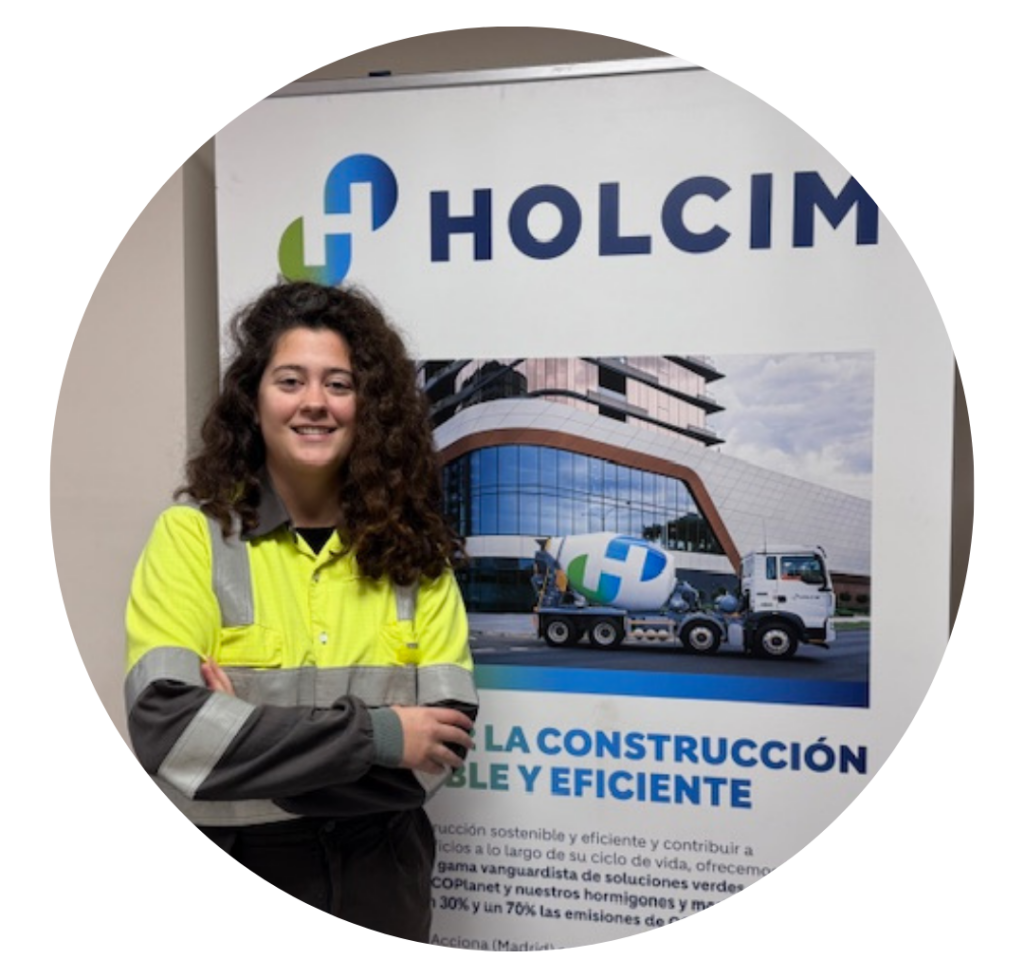
The project, as explained by Sara Dopico Caaveiro, Environmental Technician at Holcim España, a partner of the Mining and Quarry Restoration Network, reflects a different way of understanding mining restoration; not as a final stage or simply as the closure of a mining site, but as an opportunity to restore ecological functionality. “Restoration should never be merely about landscaping. It must restore ecosystems, with everything that this entails,” she stresses.
The initiative forms part of the company’s global nature strategy, which sets a target of achieving a net positive impact by 2030. In practice, this means that mining operations should not simply focus on minimising damage, but, by working with conservation experts, should use the opportunities offered by mining voids in favour of nature. At Alba Jerez I —in the San Gaspar and Casa Colorada extraction areas— this roadmap has taken shape through the transformation of around 100 hectares of former marl quarry into a system of connected temporary wetlands, located next to the Laguna de Medina Nature Reserve, designated a Wetland of International Importance under the Ramsar Convention.
Designing a functioning ecosystem in part of an active quarry
The mining concession dates back to 1982, and the first Restoration Plan, submitted in 1988, reflected the regulatory framework in force at the time. The approach was typical of the period: softening slopes, levelling the terrain, returning it to agricultural or forestry uses and removing any water bodies.
The real change came in 2017, when, thanks to the coordinated vision of naturalists (Cinclus) and the Mining and Environmental Administration, a Non-Substantial Modification of the plan was approved, abandoning the traditional approach and opting instead for a geomorphological redesign of the mining void to create a wetland complex in an area of the quarry where extraction activities were nearing completion. Uniform profiling gave way to variable slopes that imitate natural forms and allow water to be managed differently.
The aim, Dopico clarifies, was not to attract a particular species. “The objective was to create a temporary wetland that would be functional and, more generally, could provide an interesting habitat for a variety of species. In particular, waterbirds, but also amphibians, invertebrates…”
This approach was consolidated in 2024 with the signing of a Land Stewardship Agreement with the Sociedad Gaditana de Historia Natural (SGHN), which is responsible for scientific monitoring and environmental education activities.
Casa Colorada and San Gaspar: two areas, one system
The restoration is organised into two main areas that function as an ecological corridor. At Casa Colorada, five interconnected lagoons have been created, with islets designed for the nesting of waders and waterbirds. The clay-rich characteristics of the marl —which is highly impermeable— help rainwater remain on the surface, creating seasonal water bodies that are renewed through overflow and maintain their quality.
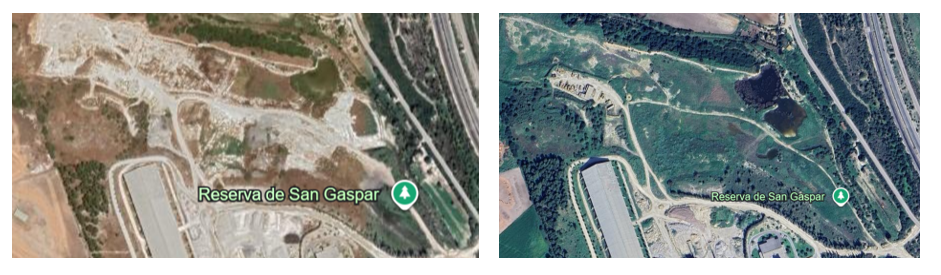
At San Gaspar, the design includes three lagoons of different depths, waterlogged transitional areas and remodelled slopes with planting terraces that reduce erosion and facilitate the establishment of native species such as wild olive and cork oak trees. Vertical walls have also been preserved for cliff-nesting birds, while invasive species such as reed and Nicotiana glauca have been removed. The site also includes nest boxes, insect hotels and rabbit shelters, as well as wooden paths and observation points that allow public access for educational purposes without interfering with ecological dynamics.
When the data support restoration
Ongoing scientific monitoring makes it possible to assess how the site evolves beyond the initial intervention. For Dopico, the natural breeding of marbled teal is “confirmation that through mining restoration it is possible to create habitats of interest for many threatened species that do not find a better place in the natural environment”.
The existence of these indicators is not secondary. “The more we demonstrate the results of nature restoration with evidence from the field, the more hopeful mining activity will be for everyone,” she states. Measurement and monitoring, she adds, are key to giving restoration greater credibility and ensuring that it is no longer perceived as a mere formality.
This approach also reflects a change in focus within the company itself. “At Holcim, thanks to working for many years with conservation experts, we are changing traditional restoration models for others that promote ecosystem restoration,” she explains.
This shift means understanding restoration as a dynamic process. “We need to pay close attention to the management of biodiversity and geodiversity during mining operations,” she says. “Mining environments can be highly interesting for many species, either temporarily or permanently, because they are areas free from certain threats, such as pesticides or invasive species. That is why restoration cannot be a fixed approach established from the outset, but rather a process that evolves with knowledge and with the involvement of conservation experts,” she adds.
Holcim is part of the Mining and Quarry Restoration Network, a platform where companies, public administrations, the scientific community and conservation experts share experiences and technical knowledge. “The key is to share experiences. Technical networks are essential for exchanging lessons learned among the different stakeholders, but it is also essential to involve nature conservation experts, whether they are small specialised SMEs or NGOs,” Dopico recalls.
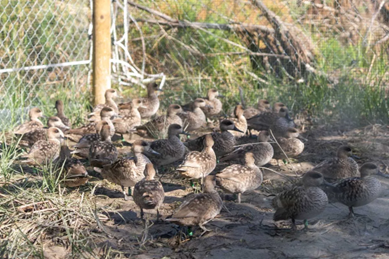
The result in Jerez is not simply a landscape improvement. It is a place where a critically endangered species has chosen to breed. And that, beyond words, is evidence on the ground that mining and nature can coexist when restoration is designed to restore ecosystems rather than simply close out permits.